Sharing within our Neighborhoods
As the economic contraction gets underway, there has been increasing interest in local currencies. Local currencies made the pages of the Los Angeles Times last month, and within the Transition communities we make a great deal about the Totnes pound. But there are many additional ways of sharing finances within communities, including time banks, LETS systems, barter, and all kinds of other creative sharing arrangements. Some of these are ways to meet our needs cash-free. Others are ways to reduce costs or to access things we might not get alone.
Alternative sharing arrangements can be as simple as a seed swap or a group purchase of bare root fruit trees. Our local group in our Los Angeles neighborhood has facilitated these in the past, and plans to repeat them this autumn. We also plan to set up a group purchase of rainwater harvesting barrels. Other simple sharing arrangements might include carpooling or sharing pet care.
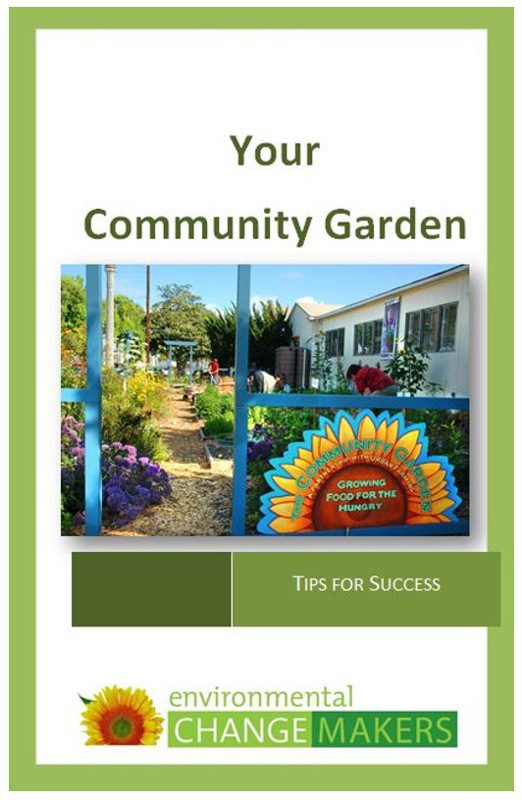
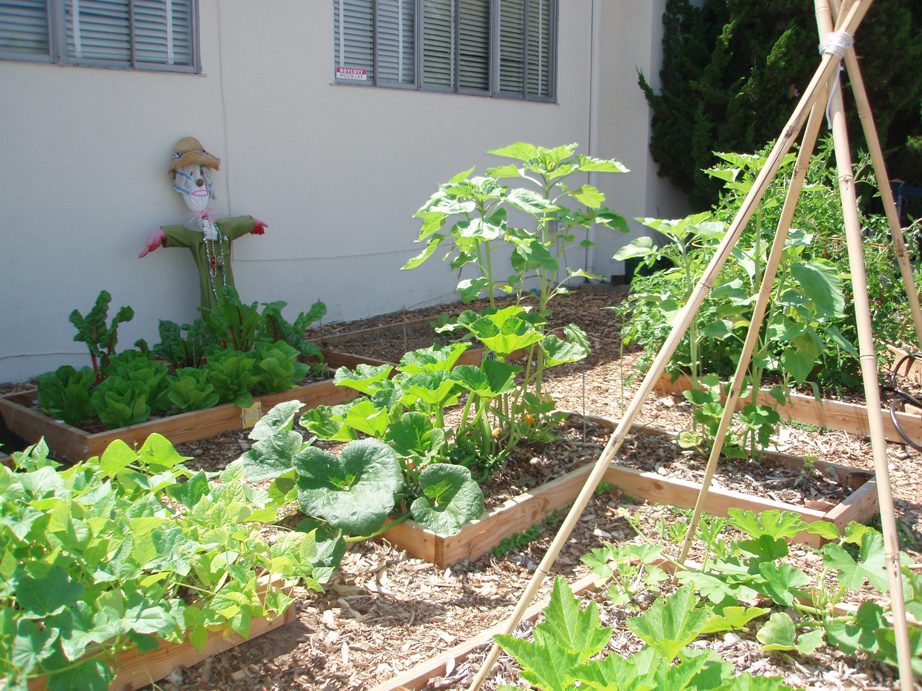
Sharing gets more elaborate with arrangements like garden sharing, where a property owner gives a gardening friend permission to grow vegetables on the property-owner’s land. In some communities, people join together to create a neighborhood home improvement group, working together on projects at different members’ homes each month. In Portland, they have a tool sharing arrangement, which works a lot like borrowing books from a library.
At the Sept 24 meeting of our local group, we’re going to explore many different ways of sharing within communities. It is designed as a way to jump-start multiple ways of community-based finances, and to get neighbors used to working together, even if a local currency doesn’t turn out to be practical for our location at this point in time. We plan to implement some of the simpler sharing techniques immediately, and the Sept 24 meeting is the public’s initial chance to join in. For the more complex systems, the Sept 24 session is a chance to meet others who are interested in setting up arrangements.
How do you set up a Neighborhood Sharing event?
1) Learn what’s possible. Read about sharing techniques, both simple and complex.
* The Sharing Solution, by Janelle Orsi & Attorney Emily Doskow, describes many simple alternative sharing techniques which are easy to set up. It also introduces some more complex techniques and gives you questions to ask and legal forms to adapt and use. www.sharingsolution.com
* North Portland Tool Library www.northportlandtoollibrary.org
* don’t forget to look up what already exists in your neighborhood under FreeCycle, The Recycler, Craig’s List free section, neighborlibrary.com
* BerkShares website www.berkshares.org
* Totnes pound webpage http://totnes.transitionnetwork.org/totnespound/home
* Portland PDXTimebank www.pdxtimebank.org
* Ithaca Hours materials
* compare-and-contrast articles like this one from Yes Magazine http://www.yesmagazine.org/issues/the-new-economy/dollars-with-good-sense-diy-cash
* our comparison chart of barter / time banks / local currencies / LETS systems http://envirochangemakers.org/documents/sharing2.pdf
2) make lists as you read:
* sharing techniques that already exist in your neighborhood
* sharing techniques that would be easy to put in place in your neighborhood
* sharing techniques that might be a little harder but you’d really like to see in your neighborhood
3) make a flier that invites people to an event about Neighborhood Sharing. Explain in the flier that there are cash-free and low-cash ways to get their needs met. List some of your ideas from #2 above.
* see our flier at http://envirochangemakers.org/documents/sharing1.pdf
4) make tabletop markers, one for each topic. We will set up the easy ones (”already exist” or “easy” in #2 above) to take signups at the table. We’ll set up discussion circles for the more complicated ones. Our tabletop markers include:
* Local currencies - discussion of possibilities
* LETS system - discussion of possibilities
* Neighborhood home improvement group - discussion of possibilities
* Group purchase of fruit trees - signup
* Group purchase of rain barrels - signup
* Garden sharing - signup
* Local CSA - signup
* Community gardens-in-formation - info about next meetings
* Seed Swap - flier about upcoming date
If any resources are appropriate (i.e. catalog for the bulk purchase of natural foods, etc.) have them out on the table at the appropriate table marker.
5) As people arrive have them complete something that makes them think, such as the Neighbor Questionnaire or “What Could I Share?” from The Sharing Solution. Offer a short talk about the different kinds of sharing. We’ll do a compare-and-contrast between Time Banks, Local Currencies, and LETS, then introduce all the other kinds of sharing techniques.
* our version of “What Could I Share?” http://envirochangemakers.org/documents/sharing3.pdf
6) Consider playing a sharing game to get them warmed up. We’ll have them compare their “What Could I Share?” worksheets with a few people around them and talk through some pretend exchanges.
7) Give a quick tour of the tabletop markers around the room, remind them of “the law of two feet” (if you are not contributing or learning it’s up to you go to somewhere where you are), then turn the crowd loose to sign up for tabletop signups and to find their way to discussion groups that they’re interested in.
8) As host, move between the discussion groups to assure they are operating smoothly.
Instruct the “Discussion of possibilities” groups to designate 2-3 potential coordinators and to select a followup meeting time.
9) Just before the event time is up, reconvene the entire group. Ask for feedback. Make sure everyone had a chance to make connections. If necessary, permit people to stand up and say “before John Jones leaves I’d like to speak with him” or “if anyone wants to talk about tool sharing, see me,” etc. Leave the table displays out until the crowd thins.
10) Publicize widely any followup meetings scheduled by the Discussion groups.
No Comments
No comments yet.
RSS feed for comments on this post.
Sorry, the comment form is closed at this time.