Transition Cities - part 1

Filed under: Community Governance, Culture & Education, Our local Community, Public presence — January 12, 2009 @ 9:01 pm

I was recently asked for my opinion on applying Rob Hopkins’ Transition concepts to a large city, since we’re currently working on a Transition initiative for Los Angeles. Here was my reply:

Q: Is the Transition model applicable to a place like [my large city]?

I think the Transition concept has much to offer L.A. or [your large city]. The thing about the Transition concept is, it’s not a one-size formula. It’s a very broad set of guidelines, and a vast network of people who are vitally eager to share what’s worked and not worked for them. So, yes, I believe there are TONS of bits of this that are useful.

Probably you’re already familiar with these but I’d be remiss not to mention them: I think that the book Post-Carbon Cities Guidebook by Daniel Lerch has a lot to guide bodies like [your city’s] Board of Supervisors.
I’ve also drawn upon the documents produced by Portland’s Peak Oil Task Force, as I work with my own governmental representatives.

The biggest thing I think that the Transition movement has to offer large cities is the affirmation that there is a Transition happening. The changes coming under climate change and peak oil are real, they present a very big problem, and we’ve got to prepare for them starting immediately. And it’s not some “outliers thing,” there are people around the world beginning this preparation process. (Including the UK Members of Parliament, many of whom read the Transition Handbook on holiday last year)

Transition teaches us exactly why high-tech “solutions” won’t serve us, that when we consider climate change and peak oil in combination, the resources available to us tend to be durable, renewable, and much lower technology. The Transition movement comes with a lot of tried and true, powered-down, small-scale solutions: it reminds us of the kind of lifestyle habits that served humanity well for thousands of years before we had oil, the kind of lifestyle habits which build resilience, our ability to adapt and change. In short, the only kind of lifestyle habits which will be realistic into a post-petroleum future.

There are many presumptions written into your email which I will try to address:

  • “not designed to be driven by governments” — In my work I emphasize that the crises we face are so big and the timeframe so short that we must employ both top-down (government) and grassroots solutions simultaneously. True, the Transition Primer praises government for following the lead of the citizenry on the Transition Initiatives. Yet this doesn’t mean that government must take no action! There is plenty that government can do to help ease our citizenry from our current energy-intense, consumerism-driven path, toward more sustainable ways. You don’t need the “branding” of the Transition movement to begin the journey. One caution, however: The industrial growth paradigm of the recent 50 to 100 years has brought us to believe that “bigger is better,” but in this Transition era that short-term mantra no longer holds validity. True workable solutions will in many cases be myriad, small scale, and local, even in places as vast as LA or [your city].
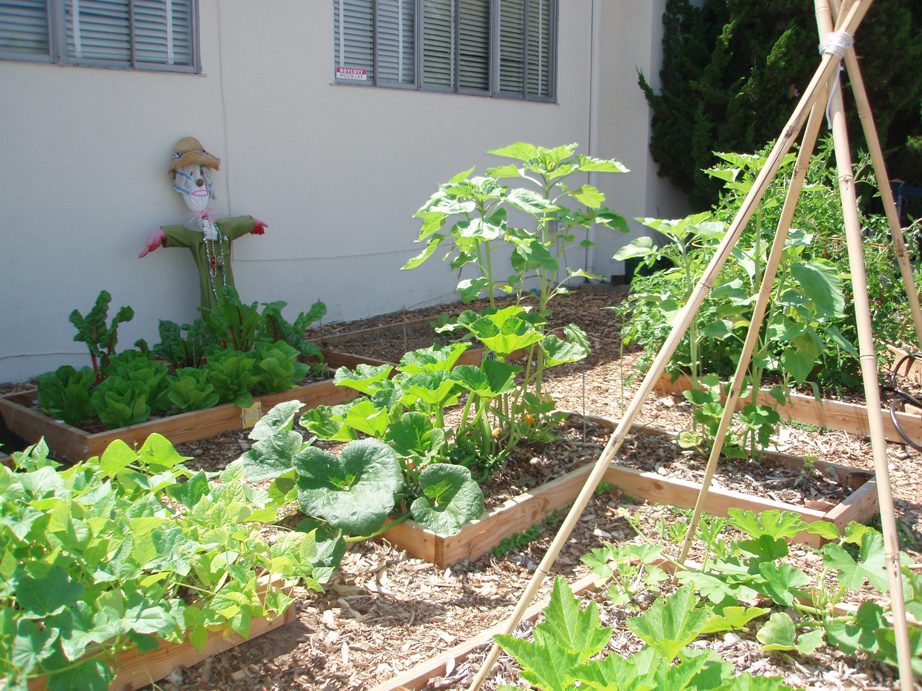
  • “[UK] places have farm land close by”/“American cities tend to have much more sprawling suburbs” – I think this is looking at food production with a viewpoint that it can only be done on wide swathes of prairie with a giant combine. During WWII 40% of our nation’s fruits and veggies where homegrown — no combines, no long truck rides, no artificial ingredients/processing (and resultant obesity and diabetes epidemics). When I look at the layout of many sections of our city, as a gardener I see the spaces and places where food could fit. It takes a different paradigm about what is food-growing space. Try using pictures from books such as Urban Eden by Adam Caplin, and Edible Container Garden by Michael Guerra, or checking the website PathToFreedom.org . Balconies, median strips, next to sidewalks — lots of food fits in amazingly small places! There’s a couple in Berkeley who raise milk goats in a tiny backyard. Note the powerful title of Food Not Lawns by HC Flores — every place we see a lawn or shrubbery, we could be producing food. Those sprawling suburbs just might be the polyculture mini-farms of our future. We have lots more space that we think we do; we just need to learn to use it!
  • “not apparent … that this model is applicable to a place like [my city]” - If not Transition, then what? What alternative do we have? What other, more workable “model”? The issue here is: this isn’t a theoretical “model.” The Transition movement and its underlying big sister Permaculture (a design system based on a set of truisms derived by observing the natural world), is a sometimes-stern, sometimes-playful, highly flexible and creative reminder of the way things work on this planet. People need food and we’ve got to grow it someplace, and in the near future when we’ve run out of fossil fuels to haul food and goods from very long distances we have no other choice than to grow food and make goods where the people are. (No, I don’t know how you’d apply it in the snows of Minnesota, but I don’t live there!)

>> [if you think Transition is applicable to big cities,] how, and what are the challenges to applying it to such a place?

Hopkins’ Transition concept defines 12 steps, including: awareness-raising of the problems we face and the need for preparedness; building bridges between citizen groups, other organizations active in the area, and local government; creating fun, noteworthy, publicity-worthy, educational events; creating Energy Descent Plans. All of these are vitally applicable to any community of citizens, regardless of size.

The challenges in applying it—here in LA, there in [your city]—include some of the same issues we encounter whenever we need to mobilize the wide-area citizenry:

  • scale of the awareness-raising project: Whether that’s earthquake preparedness kits, water conservation in a drought year, recycling and landfill diversion, hazardous waste collection, or how to safely use greywater, the problem is the same. Advertizing is expensive, and the multitude of media vehicles we must use to spread the word to a population of this size are mind-boggling in number and scale. But Laurie David and Al Gore experienced phenomenal success in getting the “global warming is real” message out to significant portions of the population, so it can be done. (If only their movie had included a realistic set of solutions …)
  • wealth: we’re not hurting enough: My impression of many smaller towns is that they’re less well-insulated from economic downturns and recessions. The hard times ahead may drive people toward some aspects of power-down, relocalization, and other compatible-with-Transition ideas, but I think change may of necessity happen faster in smaller communities. Here in LA (and undoubtedly in [your city]) the wealthy hold the media, the corporate power, and the political power. Even if the “economically vulnerable populations” are feeling the pinch of peak oil, the wealthy class’s financial reserves and ability to cut deals and find angles will protect them from “needing” to change for quite a long while – the “I’ll change when I have to” syndrome. And during that long while, big city media, corporations and politicians will stay the course with business as usual.
  • infrastructure: I’m not that familiar with how [your city] gets their water, processes sewage and deals with solid waste. But here in LA all of these processes are heavily petroleum-dependent. One source said 18% of California’s electricity (mostly coal-derived) goes to pumping, filtering, and hauling water and waste water. As the petroleum era comes to a close we have no viable backups in place. Taking water as an example, severe habit revamping to cut demand will be of some help, as will widespread rainwater harvesting and greywater practices. But these techniques require a vast reeducation process. How do we go about it? How do we access all those people — many with a deficient high school education — to teach them the new ways?

But despite these incredible challenges we still must go forward. “Business as usual” isn’t a viable option. Waiting for techno-solutions isn’t a realistic option. Doing nothing isn’t an ethical option. We have to make the most of what we have to work with.

No Comments

No comments yet.

RSS feed for comments on this post.

Sorry, the comment form is closed at this time.