Seed Saving

Filed under: The Garden Gate, Land & Nature Stewardship, Our local Community — September 10, 2008 @ 7:25 am

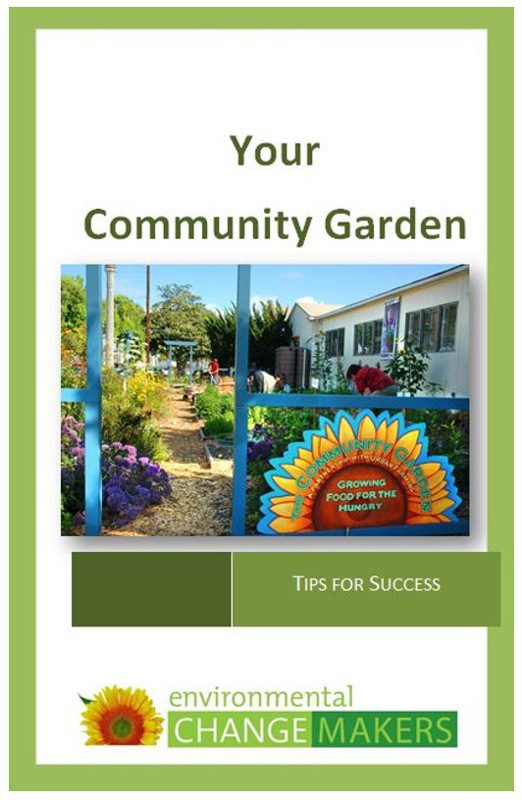
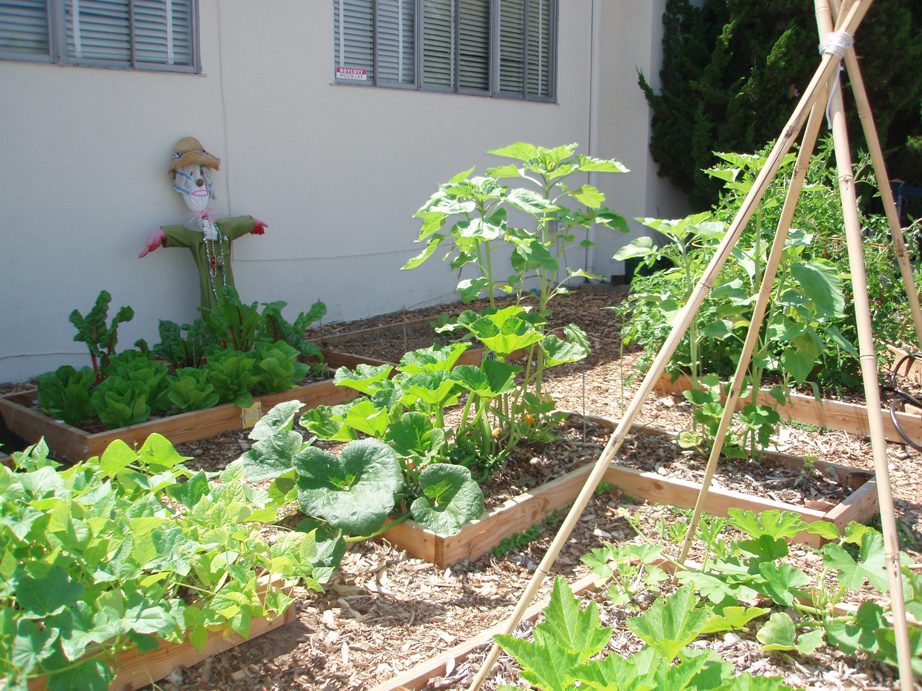
This week it’s time for another garden class at the Community Garden at Holy Nativity. One of our regular participants requested the topic “seed saving.” I scheduled the topic for now, September, when some of the first seeds from summer vegetables are coming ripe in our Southern California gardens.

First off, let me acknowledge my reference source for all things seed: Suzanne Ashworth’s Seed to Seed. This book is a wealth of information. I’d classify the book’s contents as being for the “intermediate to advanced” vegetable gardener — hers is pretty intense stuff if you’re just beginning.

There are several reasons to save seed:

  • diversity - helping preserve heirloom vegetable subvarieties, which were developed by people through the years to adapt to specific circumstances (drought tolerance, frost tolerance, heat tolerance, acid/salty soil tolerance, early/late ripening, flavor, etc.). With our factory approach to farming, many of these subvarieties are being lost, at exactly the time–what with global warming climate disruptions–that humanity needs diversity and adaptive abilities the very most.
  • Sustainability - if we don’t save our own seed, we’re consumers of seed, buying new each year and relying on someone else to save it for us. As we reach for more Sustainable lifestyles, we’ll realize that all that shipping, plus that consumerist attitude, aren’t the direction of our future. In many cases, we can produce the seed for our garden ourselves, right here in our neighborhoods. Plus it’s often quite easy to do!
  • completed life cycle - seed saving is the natural conclusion to a season in the garden. It’s fun, and its fulfilling. It connects us to the cycles of the earth. There was a marvelous quote from Patricia Klindienst’s book The Earth Knows My Name — I can’t find it now but will look it up and repost it here later. Klindienst was interviewing an elder gardener. As the gardener harvested seed, Klindienst pondered whether the true harvest was the vegetable for the table, or the seed which held the promise of next year’s bounty.

Let’s start with an idea of how easy it can be to produce seed: In my garden, at season’s end I cut the old plants down and throw them in a pile on the lawn for my husband to hit with the lawn mower and chop them a bit prior to loading the composter. The next spring, that patch of “lawn” sprouts all kinds of vegetable seedlings! (yes, I have an edible lawn!)

The thing about seedsaving is, you have to be prepared for some parts of your garden to look a little scruffy while the seedheads mature. You can’t be aiming for the immaculate, verdant green aesthetic. You must embrace the full cycle of your garden’s life and fertility.

HOW DO YOU SAVE SEED?

Well, as you can see in the story above, it’s really pretty simple. Let your plants do their thing. Let the lettuces sprout that long tower that then sprouts flowers. Let the cilantro put up tall lacy heads of white blossoms - they look like Queen Anne’s Lace. Let the collards yellow blossoms show, and watch the chard tower to 4 feet, 5 feet, 6 feet before it gets long curved stalks of what look like brown beads on a chain.

Appreciate your invisible helpers, the pollinators. We’ve heard a lot on the news about the honeybee, but realize that this little lady is only one of many pollinators. She’s just the one that’s big enough for us to see (and she conveniently organizes in hives, which the commercial growers have figured out how to move from monoculture orchard to monoculture orchard). In my garden, a lot of the work is done by hoverflies, bumblebees, and other less visible helpers. In order to have lots of helpers, you have to have lots of the kind of flowers that attract them, flowers that nourish them at your garden location through the year, even when your desired vegetable flower isn’t blooming. Your cultivated hybrid roses won’t do the trick. The kind of flowers that attract your pollinators are typically the kind of flowers that have broad clusters that are made up of a myriad of tiny, tiny flowers. Yarrow. Cilantro. Other small flowers native to your area. Try a pollinator mix, such as Bountiful Gardens‘ Border Patrol Wildflower Mix. Plant this delightful mix in spaces adjoining your vegetable garden.

WHAT TO SAVE

You often hear people say “don’t save the seed of hybrids.” Why not, and what’s a hybrid anyway? A hybrid is when a plant breeder has intentionally bred “variety x” with “variety y” to gain certain attributes. If the resulting plant–we’ll call it “xy”–produces seed, the offspring of this mixed breeding won’t necessarily look like xy. Some of the offspring might look like “variety x” and others like “variety y.” In some cases, the seed of “xy” might even turn out to be sterile. This is why, if you buy sprouted tomato seedlings at a garden center, it’s not wise to choose that plant to save seed. You don’t know what its parents were like.

Open pollinated” means vegetables that were left out in the field with many of their similar kin for the wind and the pollinators to do their thing. Open pollinated cucumbers might have been grown in a field that was isolated from other cucumber subvarieties in order to preserve the purity of the subvariety, but they are not the product of hybridization like little “xy” in the story above. The kids of open pollinated vegetables will look like their parents. In the lingo of the seed savers, they will breed true. The seed catalogs I recommend all sell only open pollinated seed.

Save only from the best. If you have diseased plants, don’t save their seed. If you have a crop failure and get only puny little sprouts, don’t allow them to set seed. Save from the lusty successes instead.

Try to save from the plants you know to have succeeded in the attributes you desire: the tomato plant that produced until Thanksgiving, that really awesome flavored squash, etc.

HOW TO SAVE SEED

This is where–again–you get to know your vegetable varieties. If you’re trying to preserve that really delicious glossy green leafed collard, you need to know that the tough blue-green one didn’t crosspollinate the blossoms of the glossy green leafed one you hope to preserve. You need to somehow isolate the subvariety you wish to save.

Isolation can be achieved in many ways. First, you can grow only that particular subvariety in your garden. Don’t grow anything else with which it can crosspollinate (and hope your urban neighbor over the fence doesn’t either, but we won’t go into that here). This is where we have to dust off our high school biology lessons. Recall the taxonomic rank: Family/Genus/Species/Variety, that’s the order it goes in. Let’s look at an example. For a pumpkin, the family is cucurbitaceae, the squash family. The genus for our pumpkin’s cousin, the cucumber, is Cucumis, while our pumpkin is Cucurbita. Another cousin, the watermelon, is Citrullus. The Species for our pumpkin might be pepo (most of the zuchinis and soft pumpkins) or it might be maxima (the hard hubbards and turbans). The variety or subvariety often appears in single quotation marks in the garden catalog. Thus our pumpkin’s full name might be: Cucurbita maxima ‘Rouge vif d’etampes’ or Cucurbita pepo ‘Small Sugar’.

If you are growing zucchini in your same garden, they are likely a Curcurbita pepo also. They will cross with the Cucurbita pepo ‘Small Sugar’. The seedlings from seeds of your Small Sugar pumpkin might not make pumpkins that looked like its parents! That is why we seed savers need to know our plants and isolate our varieties.

There are several ways to isolate plants. Commercial breeders often do it by keeping potential crosses long distances apart, or by using isolation cages. Know your plants — Is this one wind pollinated (corn)? The separation distance might be considerable, thus you are faced with using physical barriers to maintain varietal purity. Does this plant self-pollinate before the blossom opens (beans)? You might be able to assure purity by growing one variety on one side of the house, and the other variety on the other side of the building. Is this plant insect pollinated (squash)? You might be able to handpollinate it yourself and then isolate the single flower. When my kids see me out there with a kiddie paintbrush, they laugh and say “Mom’s pretending she’s a bee!”

In the garden class session, we demonstrated how to hand pollinate squash blossoms. Then we had hands-on examples of different plants from my garden and the Community Garden including legumes, composite flowers, umbellifers, alliums. We also discussed special treatment for tomatoes.

HOW DO YOU STORE SEED?

Labels, labels, labels. As soon as you get the seed, make the label. Don’t wait and tell yourself you’ll remember. You won’t. A year later, those little round black balls of collard seed look EXACTLY like the little round black balls of kale seed. Note the name (if you know it), and the year/season you saved it: Collards ‘McCormack’s Green Glaze’ Summer 2007. I often note the source where I got the parent seed: origins Garden Medicinals. If it’s something like a squash, where I need to be concerned about crossing, I’ll also note the botanic name from the catalog (Cucurbita pepo for our Sugar pumpkins above).

You should store seed where it’s dry and dark. Some years ago I bought a single box of little brown “key” envelopes (like an apartment landlord might use for keys) at Staples. You can write on the outside and the packets will fit nicely in your files with your purchased packets. My kids asked the other day why I don’t reuse the envelopes with the pretty pictures on them. I like to have the visual note of my little brown envelopes that say “this one I saved myself.” Additionally, there’s more writing space on my blank envelopes than on the reused commercial ones, and you’ll need to keep refreshing the date. Keep your seeds separated by year they were harvested. (more on that below).

Seeds should, for the most part, be kept dry and cool. If you have a large quantity of seed, reused glass mayonnaise jars, pickle jars, salsa jars come in handy. For the Community Garden, this is the direction we’ll be headed — our quantities will be quite big. Keep those jars in a dark cupboard, in the coolest location in your house.

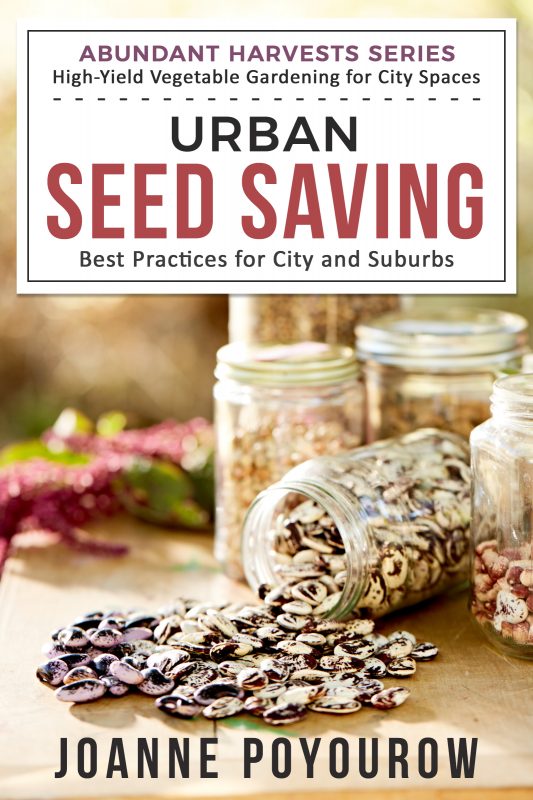
Different seeds remain viable (able to sprout) for different lengths of time. Parsnips are notorious — their seed lasts a mere matter of months. If you have parsnip seed that’s a year or two old, feed your composter, throw it out. The onion family (leeks, onions, scallions) also has short-lived seed, about a year. If you have three year old onion seed, it’s pretty much worthless. Some seeds last for years — I’ve heard of lotus seeds that sprouted after centuries. The story of sprouting Native American squash seeds found in ruins is likely a myth, though, as squash seed for practical matters is usually good for about 6 years. Ashworth’s book details how long each seed is viable, by genus.

To keep an old variety alive, what people do is grow it out. That means that they sprout and grow a quantity of the seed, and save seed from that grow out. Remember, you’re not saving an inert thing like a piece of cement or marble. A seed is a tiny kernel of life.

For more information on Edible Landscaping and Vegetable Gardening in Southern California / Los Angeles, please see my list of resources at www.LegacyLA.net/EdibleLandscape.htm

No Comments

No comments yet.

RSS feed for comments on this post.

Sorry, the comment form is closed at this time.